

As an OEM machining parts supplier, I understand that quality issues can sometimes arise even after the parts have been received by our customers. Dealing with these issues effectively is crucial for maintaining a good relationship with our clients and ensuring the smooth operation of their projects. In this blog, I will share some practical steps on how to handle quality issues of OEM machining parts after receiving them.
Step 1: Immediate Inspection and Documentation
Once the parts are received, the first step is to conduct a thorough inspection. This should be done as soon as possible to identify any obvious quality problems. Our customers should have a well - defined inspection process in place. For example, they can use precision measuring tools such as calipers, micrometers, and coordinate measuring machines (CMM) to check the dimensions of the parts. They should also visually inspect the surface finish for any scratches, cracks, or other defects.
During the inspection, it is essential to document all findings. Take clear photos of the defects and record detailed measurements. This documentation will serve as evidence when communicating with us about the quality issues. It will also help us understand the nature and extent of the problems more accurately.
Step 2: Communicate with the Supplier Promptly
After identifying the quality issues and documenting them, the next step is to contact the supplier immediately. In my case, as an OEM machining parts supplier, I encourage my customers to reach out to me as soon as they find any problems. Provide me with all the documented information, including photos, measurement data, and a detailed description of the defects. This will enable me to assess the situation quickly and start working on a solution.
When communicating, be clear and specific about your expectations. For example, if you need a replacement part, state the quantity and the required delivery time. If you have concerns about the impact of the defective parts on your project schedule, share this information as well. Open and honest communication is the key to resolving quality issues efficiently.
Step 3: Root Cause Analysis
As a supplier, my team and I will conduct a root - cause analysis to determine why the quality issues occurred. This may involve reviewing the manufacturing process, checking the raw materials used, and examining the quality control procedures in place. For instance, if the parts have incorrect dimensions, we may look into whether there were errors in the programming of the CNC Milling Machining Services machines or if there were problems with the tooling.
By identifying the root cause, we can take appropriate corrective actions to prevent similar issues from happening in the future. This not only benefits the current order but also helps improve the overall quality of our products.
Step 4: Evaluate the Available Solutions
Based on the root - cause analysis, we will work with the customer to evaluate the available solutions. There are several options depending on the nature and severity of the quality issues:
- Replacement Parts: If the defective parts cannot be repaired, providing replacement parts is often the most straightforward solution. We will manufacture new parts according to the correct specifications and ensure that they meet the required quality standards. The replacement parts will be inspected thoroughly before being shipped to the customer.
- Repair: In some cases, the defective parts can be repaired. Our team of skilled technicians has the expertise to repair minor defects such as surface scratches or small dimensional inaccuracies. We will assess the feasibility of repair and provide an estimate of the time and cost involved.
- Compensation: If the quality issues have caused financial losses or delays to the customer's project, we may offer compensation. This could be in the form of a discount on the current order, a refund for the defective parts, or reimbursement for any additional costs incurred due to the quality problems.
Step 5: Implement Corrective and Preventive Actions
Once the quality issues have been resolved, it is important to implement corrective and preventive actions to avoid similar problems in the future. As a supplier, I will review and improve our manufacturing processes, quality control procedures, and employee training programs. For example, if the root cause of the quality issues was a lack of proper training for the operators, we will provide additional training to ensure that they have the necessary skills and knowledge.
On the customer's side, they can also take steps to prevent quality issues. This may include strengthening their incoming inspection procedures, providing more detailed specifications and requirements during the ordering process, and maintaining a closer relationship with the supplier to monitor the production progress.
Step 6: Follow - up and Quality Assurance
After the replacement parts are delivered or the defective parts are repaired, it is important to follow up to ensure that the quality issues have been fully resolved. The customer should conduct another inspection of the parts to confirm that they meet the required quality standards. If there are still any concerns, continue to communicate with the supplier until the issues are completely resolved.
As a supplier, I also have a quality assurance process in place. We will conduct regular audits of our manufacturing processes and products to ensure that the quality remains consistent. We will also keep in touch with our customers to get feedback on the resolved quality issues and to identify any areas for further improvement.
Conclusion
Dealing with quality issues of OEM machining parts after receiving them requires a systematic approach. By following the steps of immediate inspection and documentation, prompt communication with the supplier, root - cause analysis, evaluation of solutions, implementation of corrective and preventive actions, and follow - up, both the customer and the supplier can work together to resolve the issues effectively.
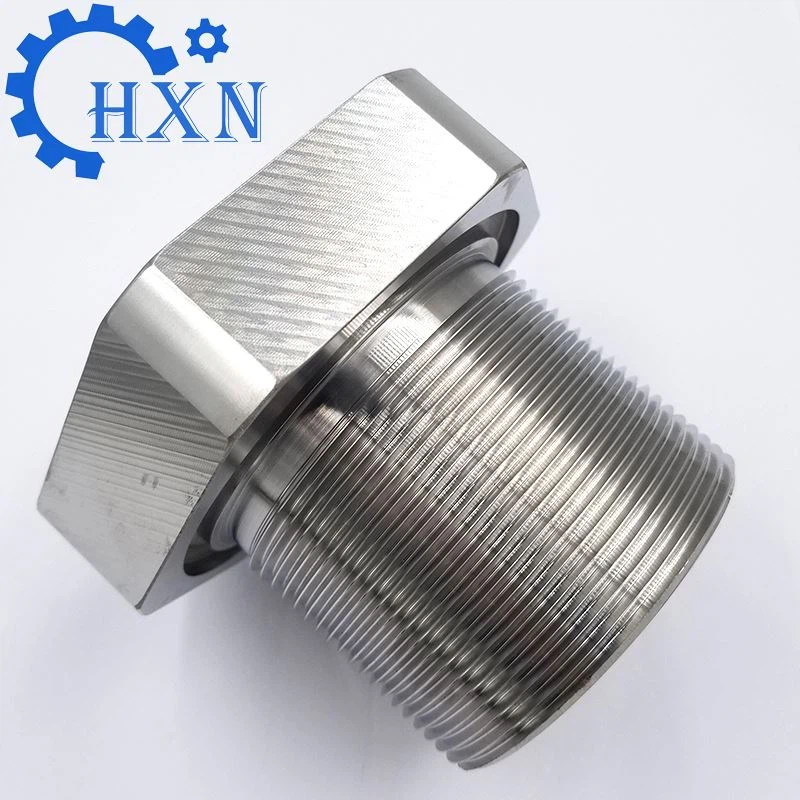

At CNC Machining Components, we are committed to providing high - quality OEM machining parts and excellent customer service. If you are facing any quality issues with your machining parts, please don't hesitate to contact us. We will do our best to address your concerns and ensure your satisfaction. Whether you need CNC Milling Machining Services or other machining components, we are here to support your business. Let's work together to achieve your project goals with top - notch quality parts.
References
- Smith, J. (2018). Quality Control in Manufacturing. Industrial Press.
- Johnson, R. (2019). Root Cause Analysis for Manufacturing Defects. McGraw - Hill.
- Brown, A. (2020). Effective Supplier - Customer Communication in the Manufacturing Industry. Harvard Business Review.