

As a dedicated supplier of stainless steel castings, I've witnessed the crucial role that density plays in the performance and application of these products. Understanding the density of stainless steel castings is not just a matter of technical knowledge; it's fundamental to ensuring that the right materials are used for the right applications. In this blog, I'll delve into what density is, how it affects stainless steel castings, and why it matters to you as a potential buyer.
What is Density?
Density is defined as the mass per unit volume of a substance. In the context of stainless steel castings, it tells us how much mass is packed into a given volume of the material. Mathematically, density (ρ) is calculated using the formula ρ = m/V, where m is the mass and V is the volume. The unit of density is typically grams per cubic centimeter (g/cm³) or kilograms per cubic meter (kg/m³).
The density of a material is an intrinsic property, which means it remains constant regardless of the size or shape of the object. For stainless steel castings, density is influenced by several factors, including the chemical composition, the presence of impurities, and the manufacturing process.
Density of Stainless Steel Castings
Stainless steel is an alloy primarily composed of iron, chromium, and nickel, with other elements added in smaller quantities to enhance specific properties. The density of stainless steel castings can vary depending on the exact alloy composition. Generally, the density of stainless steel ranges from about 7.75 g/cm³ to 8.05 g/cm³.
For example, SS304, one of the most common stainless steel alloys, has a density of approximately 7.93 g/cm³. This alloy contains around 18% chromium and 8% nickel, which contribute to its corrosion resistance and relatively high density. On the other hand, SS316, another widely used alloy, has a density of about 7.98 g/cm³. SS316 contains molybdenum, which enhances its corrosion resistance in chloride-rich environments, and this additional element slightly increases its density.
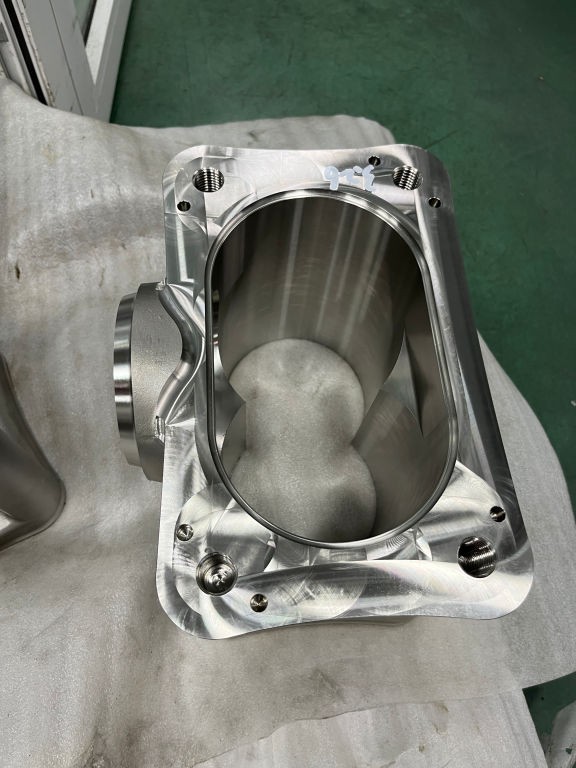
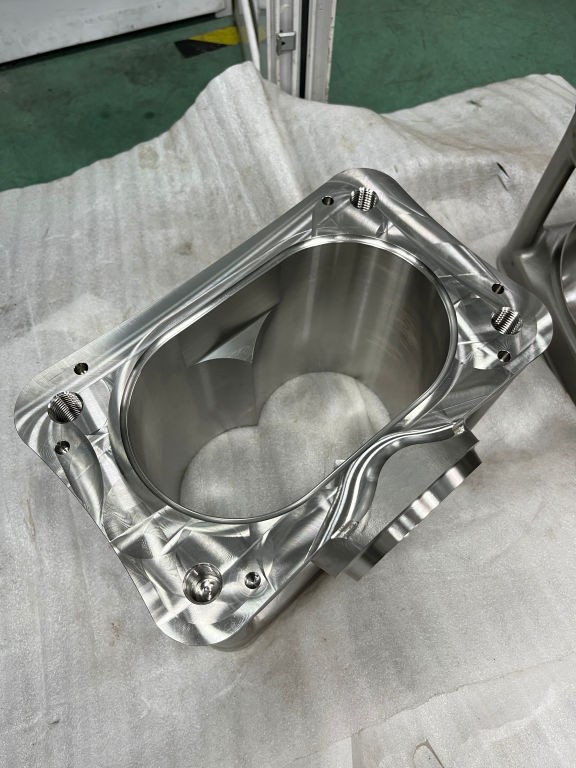
The density of stainless steel castings can also be affected by the casting process. For instance, Silica Sol Casting is a precision casting method that can produce high-quality castings with a relatively uniform density. This process involves creating a ceramic mold using a silica sol binder, which allows for intricate shapes and tight tolerances. The resulting castings often have a more consistent density compared to those produced by other methods.
Importance of Density in Stainless Steel Castings
The density of stainless steel castings is important for several reasons. Firstly, it affects the weight of the final product. In applications where weight is a critical factor, such as aerospace or automotive industries, knowing the density of the stainless steel casting is essential for designing lightweight yet strong components.
Secondly, density can impact the mechanical properties of the casting. A higher density generally indicates a more compact and homogeneous structure, which can lead to better mechanical properties such as strength and hardness. However, it's important to note that density alone is not a definitive indicator of mechanical performance, as other factors such as heat treatment and microstructure also play significant roles.
Thirdly, density can be used as a quality control parameter. By measuring the density of a stainless steel casting, manufacturers can detect potential defects such as porosity or inclusions. A significant deviation from the expected density could indicate the presence of internal flaws that may affect the performance and reliability of the casting.
Applications and Density Considerations
The density of stainless steel castings has different implications depending on the application. In the marine industry, for example, Silica Sol Casting Parts SS316 Stainless Steel are commonly used due to their high corrosion resistance and appropriate density. The density of SS316 helps ensure that the castings can withstand the harsh marine environment while maintaining their structural integrity.
In the food and beverage industry, stainless steel castings are used for equipment such as pumps, valves, and containers. The density of the castings is important for ensuring proper functionality and hygiene. A casting with the right density will have a smooth surface finish and fewer pores, which reduces the risk of bacterial growth and contamination.
In the construction industry, stainless steel castings are used for architectural and structural applications. The density of the castings affects their load-bearing capacity and overall stability. For example, Investment Cast 316 Stainless Steel is often used for building facades and structural supports due to its high strength and corrosion resistance.
Measuring the Density of Stainless Steel Castings
There are several methods for measuring the density of stainless steel castings. One common method is the Archimedes' principle, which involves weighing the casting in air and then in a liquid of known density. By comparing the two weights, the volume of the casting can be calculated, and then the density can be determined using the formula ρ = m/V.
Another method is using a density meter, which can provide a more accurate and rapid measurement. Density meters work based on different principles, such as buoyancy or vibration. These devices are often used in quality control laboratories to ensure that the density of the stainless steel castings meets the specified requirements.
Conclusion
In conclusion, the density of stainless steel castings is a crucial property that affects their performance, application, and quality. As a stainless steel casting supplier, we understand the importance of density and its implications for our customers. We use advanced manufacturing processes and quality control measures to ensure that our stainless steel castings have the appropriate density and meet the highest standards.
If you're in the market for high-quality stainless steel castings and need more information about density or other properties, we're here to help. Whether you're working on a small-scale project or a large industrial application, our team of experts can provide you with the right solutions. Contact us to discuss your specific requirements and let's start a successful partnership in the world of stainless steel castings.
References
- ASM Handbook, Volume 15: Casting
- Stainless Steel World Magazine
- "The Science and Engineering of Materials" by Donald R. Askeland and Pradeep P. Phule