

Stainless steel bushings are crucial components in various industries, providing support, reducing friction, and ensuring smooth operation of machinery. As a leading supplier of stainless steel bushings, I often encounter inquiries about the grades of stainless steel used in their manufacturing. In this blog post, I will delve into the different grades of stainless steel commonly employed for bushings, their properties, and applications.
304 Stainless Steel
One of the most widely used grades for stainless steel bushings is 304 stainless steel. This austenitic stainless steel contains approximately 18% chromium and 8% nickel, which gives it excellent corrosion resistance, especially in mildly corrosive environments such as those with exposure to air, water, and some chemicals.
The high chromium content forms a passive oxide layer on the surface of the bushing, protecting it from rust and oxidation. The addition of nickel enhances the corrosion resistance further and also improves the ductility and toughness of the material. This makes 304 stainless steel bushings suitable for a wide range of applications, including food processing equipment, marine applications, and general industrial machinery.
In food processing, the corrosion resistance of 304 stainless steel ensures that the bushings do not contaminate the food products. In marine environments, the ability to withstand saltwater corrosion is essential for the longevity of the bushings. In general industrial machinery, the good mechanical properties of 304 stainless steel allow the bushings to handle normal operating loads and provide reliable performance.
316 Stainless Steel
For more demanding corrosive environments, 316 stainless steel is often the preferred choice. This austenitic stainless steel contains a higher percentage of chromium (around 16 - 18%) and nickel (10 - 14%), along with 2 - 3% molybdenum. The addition of molybdenum significantly enhances the corrosion resistance of 316 stainless steel, particularly in chloride-rich environments such as seawater.

316 stainless steel bushings are commonly used in marine applications, chemical processing plants, and medical equipment. In marine applications, the superior corrosion resistance of 316 stainless steel ensures that the bushings can withstand the harsh conditions of saltwater, including exposure to salt spray and high humidity. In chemical processing plants, the resistance to a wide range of chemicals makes 316 stainless steel bushings ideal for use in pumps, valves, and other equipment. In medical equipment, the biocompatibility and corrosion resistance of 316 stainless steel are important for ensuring the safety and reliability of the devices.
410 Stainless Steel
410 stainless steel is a martensitic stainless steel that contains around 11.5 - 13.5% chromium. It offers good corrosion resistance, but it is not as corrosion-resistant as the austenitic grades (304 and 316). However, 410 stainless steel has high strength and hardness, which makes it suitable for applications where wear resistance is important.
410 stainless steel bushings are commonly used in automotive applications, such as engine components and transmission systems. The high strength and hardness of 410 stainless steel allow the bushings to withstand the high loads and stresses encountered in these applications. In addition, the relatively good corrosion resistance of 410 stainless steel provides some protection against rust and oxidation in the automotive environment.
440C Stainless Steel
440C stainless steel is a high-carbon martensitic stainless steel that contains around 16 - 18% chromium and up to 1% carbon. It is known for its excellent wear resistance, high hardness, and good corrosion resistance.
440C stainless steel bushings are often used in applications where high wear resistance is required, such as bearings, pumps, and valves. The high carbon content in 440C stainless steel allows it to be heat-treated to achieve a high level of hardness, which makes it suitable for use in high-load and high-speed applications. The good corrosion resistance of 440C stainless steel also ensures that the bushings can withstand the corrosive effects of the operating environment.

Choosing the Right Grade for Your Application
When selecting the grade of stainless steel for bushings, several factors need to be considered. The first factor is the operating environment. If the bushing will be exposed to a corrosive environment, such as saltwater or chemicals, a grade with high corrosion resistance, such as 316 stainless steel, should be chosen. If the application requires high wear resistance, a grade like 440C stainless steel may be more suitable.
The second factor is the load and stress requirements of the application. If the bushing will be subjected to high loads and stresses, a grade with high strength and hardness, such as 410 or 440C stainless steel, should be selected. The third factor is the cost. Different grades of stainless steel have different costs, and the choice of grade should be based on a balance between performance and cost.
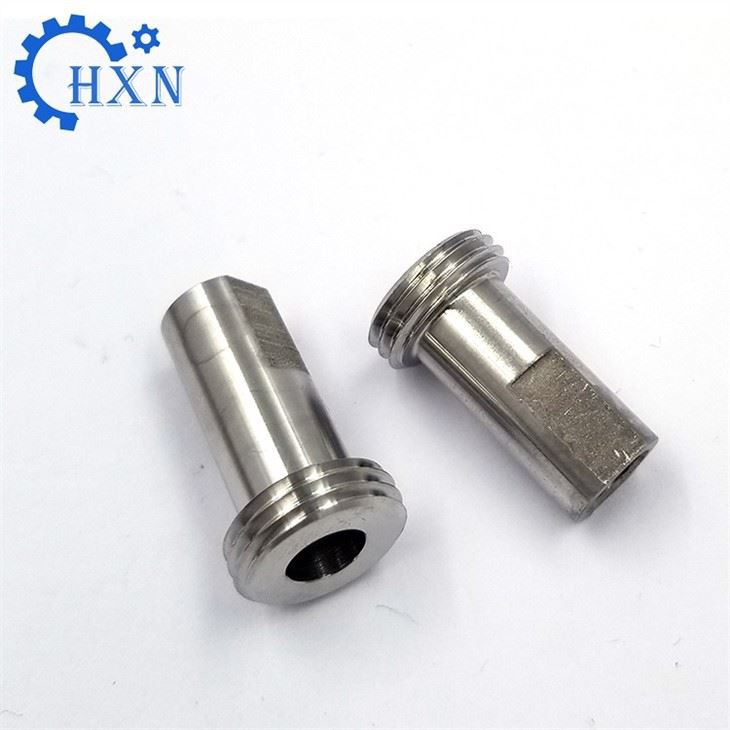
As a supplier of stainless steel bushings, we offer a wide range of grades to meet the diverse needs of our customers. We also provide Custom Cnc Turned Parts and Metal Turned Parts Components services to ensure that the bushings are manufactured to the highest quality standards. Our CNC Turns Parts are precision-machined to meet the exact specifications of our customers.
If you are in need of stainless steel bushings for your application, we invite you to contact us to discuss your requirements. Our team of experts will be happy to assist you in selecting the right grade of stainless steel and provide you with a competitive quote. We are committed to providing our customers with high-quality products and excellent customer service.
References
- ASM Handbook, Volume 13A: Corrosion: Fundamentals, Testing, and Protection. ASM International.
- Stainless Steel World Magazine. Various articles on stainless steel grades and applications.
- Machinery's Handbook. Industrial Press Inc.